Fewer blind decisions
Review what happened in the clinic without relying on scattered spreadsheets or data split across multiple screens.
Gvet turns your clinic's daily activity into clear reports on sales, cash, appointments, visits, vaccines, stock and performance. Try it free for 6 months.
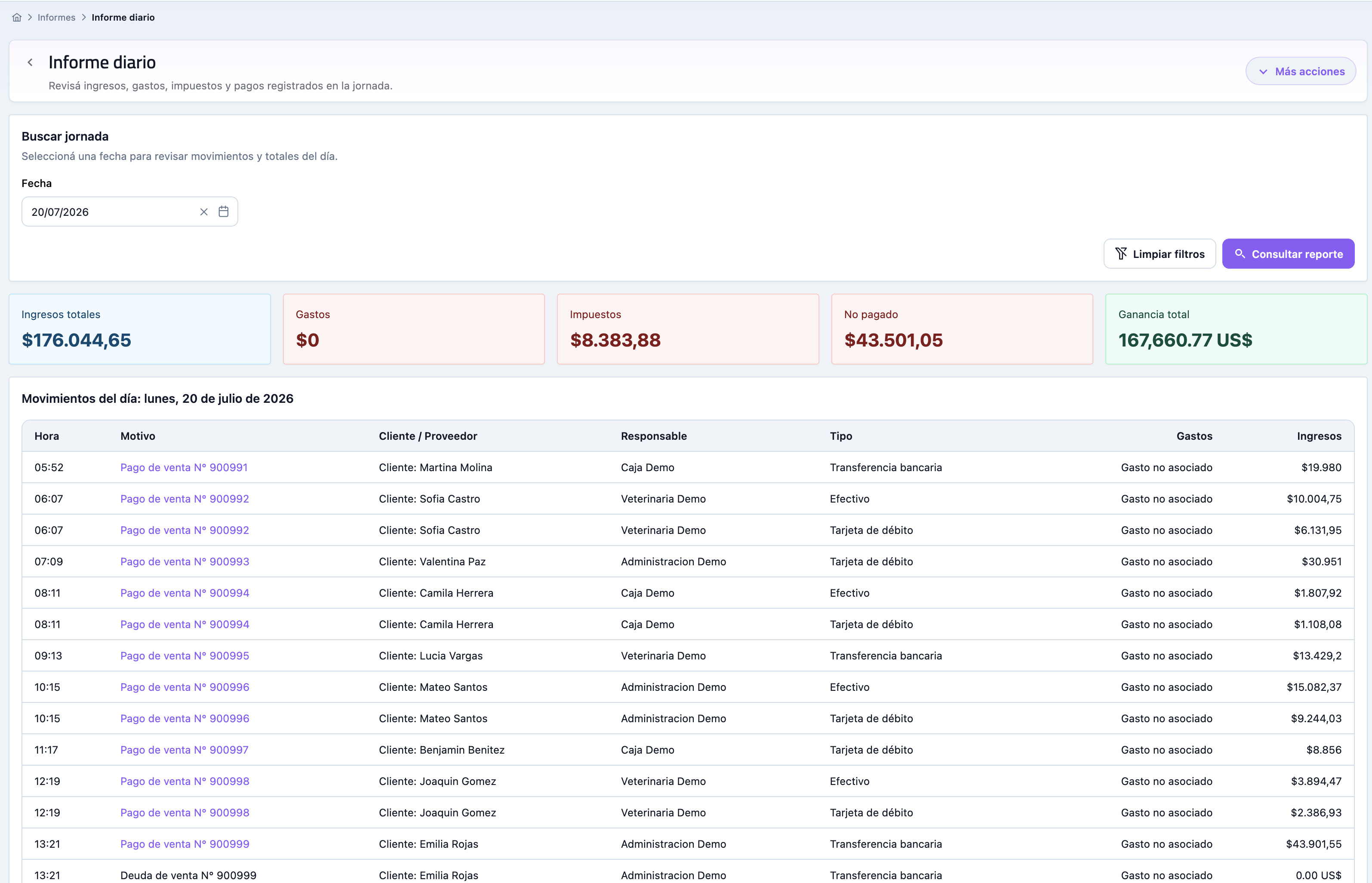
Review what happened in the clinic without relying on scattered spreadsheets or data split across multiple screens.
Understand sales, revenue, expenses, outstanding balances and most-used services to find opportunities for improvement.
Measure appointments, visits, vaccinations, inventory and productivity across teams, locations or high-volume service areas.
Gvet reports use data from scheduling, medical records, sales, cash, inventory and reminders to show a more complete view of the business.
Analyze what sells, when it sells and how each category impacts veterinary revenue.
Review cash movements, payments, client balances, expenses and closing activity to keep daily finances under control.
Measure demand, monthly visits, no-shows and scheduling behavior to improve planning.
Review completed reminders, applied vaccines and upcoming controls to strengthen preventive care.
Connect sales and stock to detect shortages, expirations, movements and products that need attention.
Review activity by team or area to coordinate roles, permissions and operational decisions with more context.
A good report does not end with looking at numbers. It helps decide what to adjust in scheduling, cash, stock and care.
Gather data from sales, appointments, visits, cash, reminders, inventory and expenses in the same system.
Review periods, categories, areas or behaviors to understand what changed and where there is opportunity.
Find shortages, no-shows, overdue balances, low turnover or services that could be communicated better to clients.
Turn insights into actions that adjust scheduling, replenish stock, contact clients or improve internal processes.
When Veterinary reports stays outside the system, the team ends up relying on memory, scattered messages or spreadsheets. Gvet turns it into a visible routine connected with the rest of the clinic.
Gvet turns Veterinary reports into a clear work habit so each person knows where to record, what to review and what comes next.
Pending work, mistakes or tasks that usually appear late become easier to detect while the team can still act.
What happens in Veterinary reports does not stay isolated and can support patients, clients, billing, inventory, or reporting.
These modules often complement the workflow you are evaluating and help show how Gvet connects each area.
Quick answers to understand what information you can measure with Gvet.
Yes. Reports use information from sales, cash, scheduling, visits, reminders, inventory and expenses entered in Gvet.
Yes. Gvet connects sales, payments, outstanding balances, expenses and cash so administration has a clearer view of the business.
Yes. You can review visits, vaccines, attendance, reminders and demand to detect patients needing follow-up and processes worth adjusting.
Try Gvet free for 6 months and see whether its reports help organize sales, cash, patients and stock.